

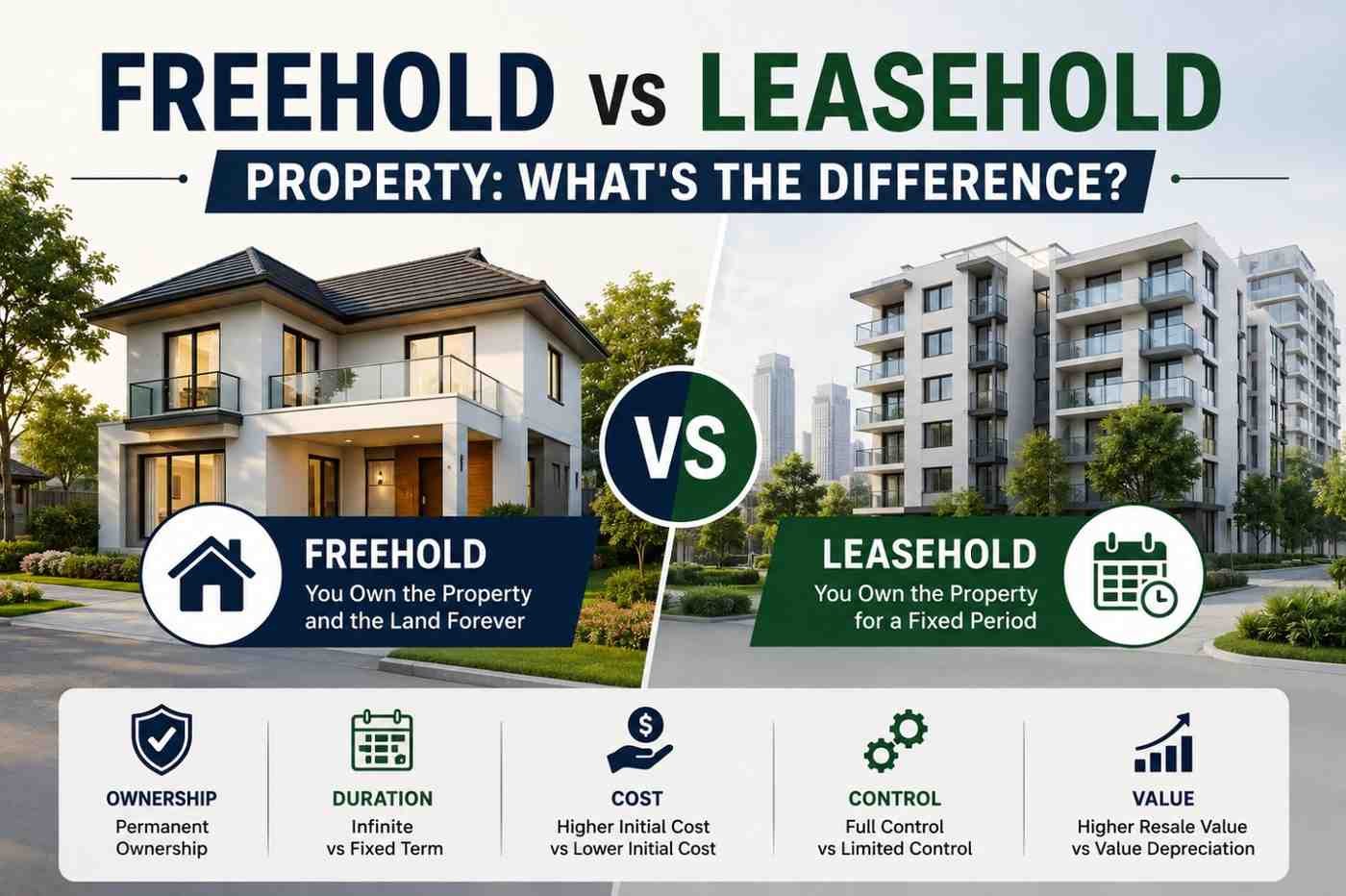
Buying a property is one of the biggest financial decisions you’ll ever make. Before signing any agreement, it’s important to understand the type of ownership you’re purchasing. One of the most common questions among homebuyers and investors is freehold vs leasehold property. Knowing the difference can help you make a smarter investment, avoid legal complications, and choose a property that aligns with your long-term goals.
Whether you’re purchasing a home, office, or commercial space, understanding ownership rights is essential. Let’s explore everything you need to know.
What Is Freehold Property?
To understand freehold vs leasehold property, you first need to know what freehold ownership means.
The freehold property meaning is pretty simple in the sense that the buyer ends up owning the building as well as the land it’s on. There isn’t any set time limit on the ownership either, and the place can be sold, passed on to someone else, inherited, or even renovated, as long as it follows the local rules and regulations.
Key Features of Freehold Property
- Complete ownership of the land and structure
- No lease renewal required
- Higher resale value
- Greater freedom for renovation and modifications
- Easier to transfer ownership to family members
Because of these advantages, freehold properties are often preferred by long-term homeowners and investors.
What Is Leasehold Property?
The leasehold property meaning is basically when a buyer “owns” the building but somehow doesn’t own the land. The land is leased back by the original owner, usually a government authority, a development authority, or a private landowner. That lease is for a fixed stretch of time, like 30, 60, 90, or even 99 years.
Once the lease period expires, it may need to be renewed according to applicable terms and conditions.
Key Features of Leasehold Property
- Ownership is valid only for the lease duration.
- Lease renewal may be required.
- Restrictions may apply to renovations or redevelopment.
- Usually costs less than comparable freehold properties.
- Certain permissions may be needed before selling or transferring ownership.
Understanding these conditions is essential when comparing freehold vs leasehold property for your investment.
Difference Between Freehold and Leasehold Property
The difference between freehold and leasehold property becomes clearer when comparing their major features.
|
Feature |
Freehold Property |
Leasehold Property |
|
Land Ownership |
Buyer owns the land |
Land remains with the lessor |
|
Ownership Period |
Permanent |
Limited lease period |
|
Property Rights |
Complete ownership rights |
Limited according to lease agreement |
|
Resale Value |
Generally higher |
May decrease as lease term shortens |
|
Renovation |
More flexibility |
May require approval |
|
Long-Term Investment |
Excellent |
Depends on remaining lease period |
This comparison highlights why understanding freehold vs leasehold property is important before making a purchase.
Freehold vs Leasehold Ownership: Which Offers Better Rights?
When comparing freehold vs leasehold ownership, it’s kinda clear freehold has more flexibility and hands-on control. In freehold arrangements, the owner has full rights over the property, as well as the land itself, which makes everything, like renovating, getting a mortgage, transferring ownership, or even passing it to future generations, a lot easier.
Leasehold ownership, however, comes with contractual limitations. Buyers should carefully review the lease agreement, including renewal clauses, maintenance obligations, and restrictions, before making a decision.
Which Is Better: Freehold or Leasehold Property?
Many buyers ask, which is better freehold or leasehold property?
The answer depends on your purpose.
Choose Freehold Property If:
- You want permanent ownership.
- You’re buying a family home.
- You’re looking for long-term appreciation.
- You want maximum ownership rights.
- You plan to pass the property to your heirs.
Choose Leasehold Property If:
- You have a limited budget.
- The property is in a premium location.
- The lease period is sufficiently long.
- You’re buying for short- to medium-term use.
- The investment still offers attractive rental returns.
Choosing between freehold vs leasehold property ultimately depends on your financial goals, investment horizon, and ownership preferences.
Things to Check Before Buying Any Property
Regardless of whether you’re buying freehold or leasehold, always verify:
- Property ownership documents
- Title deed and registration records
- Remaining lease period (for leasehold properties)
- RERA registration, if applicable
- Pending legal disputes
- Outstanding loans or dues
- Local authority approvals
Taking these precautions can help you avoid future legal or financial issues.
If you’re planning to buy a residential OR commercial property in Kundli, then talking to experienced Real Estate Companies in Kundli can help you check ownership records, weigh different plot or flat options, and end up with a more informed choice. In a similar way, a company that needs offices , retail spaces, or even investment chances can also work with a trusted Commercial Real Estate Agent in Kundli, so you get solid market direction and yeah, fewer surprises later.
Conclusion
Getting your head around freehold versus leasehold property is kind of vital, before you put money into real estate. With freehold you usually get full command, lasting rights, and often stronger long-term worth, it’s pretty straightforward. Leasehold, on the other hand, can feel more affordable for a good area, yet it comes with some boundaries, and it is not always as permanent, which matters.
Before you make a purchase, you should really compare the ownership rights, the lease terms, the legal documents as well as your future resale potential. If you’re smart about it today, it can protect your investment and give you more calm and quiet later on, for years to come. And whether you’re coming in as a first-time buyer, or you already have experience as an investor, understanding the difference between freehold and leasehold property helps you pick the ownership model that fits your needs, and also matches your financial targets.